
Tesla's Most Hyped Car Just Returned. Here's What Inventors Can Learn From It.
Apr 24, 2026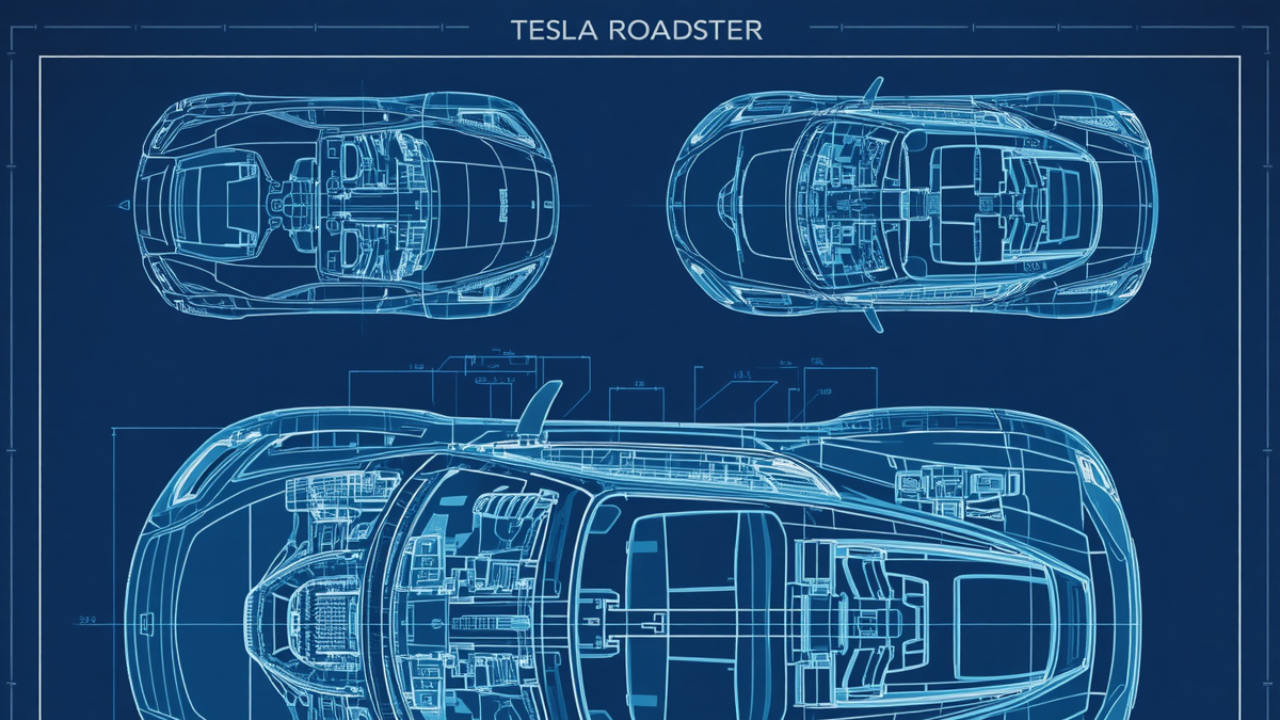
What the most anticipated car relaunch of the decade quietly teaches innovators about protecting what they build.
Zero to sixty in under two seconds. A claimed top speed north of 250 mph. Enough buzz to break the internet every time a new teaser drops. The Tesla Roadster relaunch is one of the most hyped moments in automotive history — and if you're an inventor, an entrepreneur, or a startup founder, there's something in it for you beyond the specs.
Because while the world obsesses over the performance numbers, a quieter question hums underneath it all: Who actually owns this? The design language, the engineering breakthroughs, the battery architecture, the aerodynamic curves — every piece of that vehicle exists because someone, somewhere, decided to protect it. And if they didn't? Someone else might be free to copy it.
Speed Is Temporary. Intellectual Property Is Permanent.
Tesla holds hundreds of patents — and in a famous 2014 move, Elon Musk announced the company would not initiate patent lawsuits against anyone using their technology "in good faith." It was a bold, PR-savvy gesture. But make no mistake: those patents still exist. They still define the boundaries of what Tesla owns. The gesture was a business strategy, not an erasure of rights.
For most innovators — especially those without Tesla's market dominance or brand recognition — that kind of openness is a luxury they can't afford. Your patent is your moat. And the Roadster's relaunch is a timely reminder of the three core IP tools that protect innovation in any industry.
"A brilliant idea without IP protection is just a very expensive gift to your competitors."
Three Types of IP Protection — and How They Apply to a Car Like the Roadster
|
UTILITY PATENT Protects how something works — the engineering, mechanism, and process |
DESIGN PATENT Protects how something looks — the ornamental, visual appearance of a product |
TRADE DRESS TRADEMARK Protects brand identity — logos and distinctive product appearance tied to a source |
Utility patents are the heavy hitters. Tesla's battery management system, its motor architecture, its charging technology — each of those represents a technical breakthrough that can be patented. A utility patent gives you the exclusive right to make, use, and sell that invention for up to 20 years from the filing date. If you've engineered something new and non-obvious that solves a real problem, this is what stands between you and a competitor who wants to copy your solution.
Design patents cover the ornamental appearance of a functional item. That distinctive silhouette of the Roadster — the curvature of the body panels, the proportions of the cabin — those visual choices can qualify for design patent protection. Design patents are often overlooked by inventors who focus only on function, but for product-driven businesses, they can be just as valuable. They're generally faster and less expensive to obtain than utility patents, and they send a clear signal that your look is yours.
Trade dress takes protection even further — it covers the overall image and appearance of a product or its packaging when that look has come to identify the brand in the minds of consumers. Think of the distinctive shape of a Porsche 911, or the red sole of a Louboutin shoe. For mature brands, trade dress can provide protection that outlasts a patent entirely, because it's tied to consumer recognition rather than a fixed term.
You Don't Have to Build a Supercar to Need This Protection
Here's what most inventors miss: IP strategy isn't just for billion-dollar companies. The same principles that protect the Roadster apply to the entrepreneur who invented a better locking mechanism for a bike rack, or the startup that designed a new medical device housing, or the small business owner who built a signature product line with a distinctive look and feel.
Consider a few scenarios that happen every day:
A solo inventor develops a new type of portable solar charger. It works differently from anything on the market. Without a utility patent application on file — establishing their priority date — a larger manufacturer could independently develop the same solution and cut them out of the market entirely. First to file matters.
A product designer creates a distinctive enclosure for a consumer electronics device. The function isn't patentable, but the look is genuinely unique. Without a design patent, a competitor can legally produce a near-identical appearance and undercut them on price. Design patents are the often-forgotten shield for product-driven businesses.
A growing brand builds strong consumer recognition around its packaging. Without trade dress registration or trademark protection, a copycat can ride the coattails of that goodwill. Protection requires intentional action, not just marketplace success.
"The window between 'I invented this' and 'someone else filed first' can be shorter than you think. The U.S. patent system rewards the first to file — not the first to invent."
Your Idea Deserves More Than a Great Pitch Deck.
Whether you're an independent inventor, an early-stage startup, or an established business launching a new product line, the right IP strategy starts with a conversation — not a generic checklist. Every invention is different. Every filing decision has real consequences for your timeline, your budget, and your competitive position.
If the Roadster's relaunch got you thinking about what you've built and who's protecting it, that's worth exploring. Reach out to an IP attorney who can assess your specific situation and help you map out a protection strategy before someone else files first.
Contact our firm today to schedule a consultation.
This blog post is for general educational purposes only and does not constitute legal advice. Patent and trademark decisions should be made in consultation with a qualified IP attorney familiar with the specific facts of your matter and the applicable rules of each jurisdiction.